
Our most recent addition to the Wildtracks manatee rehab group is a Greater Caribbean manatee named Twix. We admitted him in November after finding he was found in a large beach trap near Sarteneja. He was just past the age when juveniles leave their mothers and navigate the environment independently - a vulnerable age, as they transition to putting the life skills they learned with their mothers into practice. The beach trap fishers reported the manatee, and the local conservation organisation (Sarteneja Alliance for Conservation and Development (SACD)) responded.
SACD extracted the manatee from the trap but noticed his breathing was poor and he was underweight, so they brought him to the Manatee Rehabilitation Centre at Wildtracks, where he has been treated for pneumonia and provided with supplemental feeds to help him regain weight.
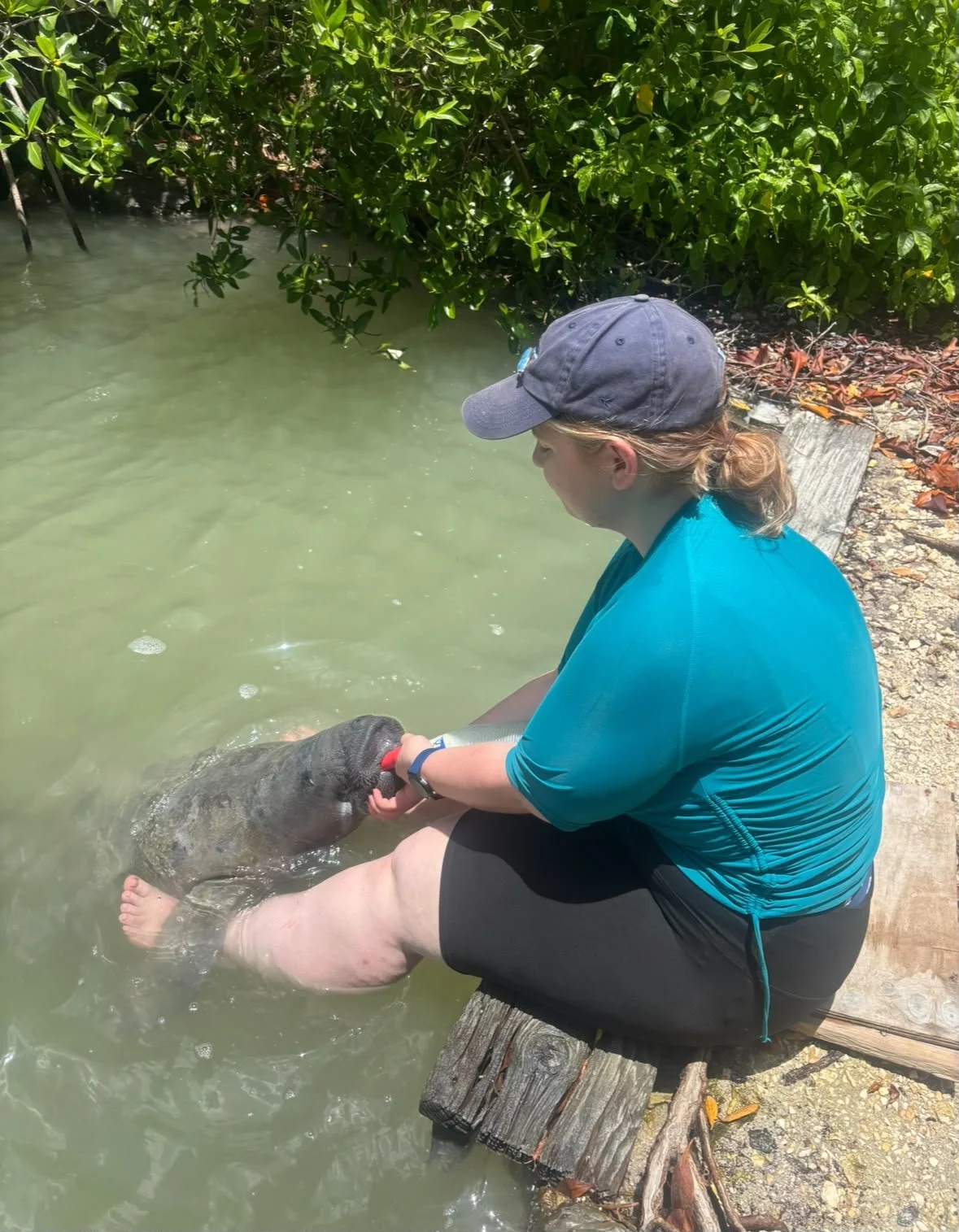
Rachel feeding Twix
In recent months, Twix has made excellent progress in his recovery, particularly in his breathing. When he came in, his breathing was short, shallow and congested, but has since dramatically improved. A vital part of manatee life is to be able to stay submerged for long periods of time to help with foraging seagrass beds along the sea floor. He is now able to dive to the bottom of his lagoon enclosure for several minutes at a time to graze on the seagrass we provide. When he breathes, his breaths are now clear – they no longer gurgle and rasp in the way they did when he first came in.
Twix has graduated to the lagoon enclosure – an important step towards soft release. With one section of the enclosure wall consisting of mesh fencing, he has had opportunities to meet some of the previous manatee residents of Wildtracks. Two wild manatees have been observed approaching his enclosure and pressing their snouts against his through the fence. This is their way of socialising, and they will hopefully visit Twix and help him adjust when he is released.
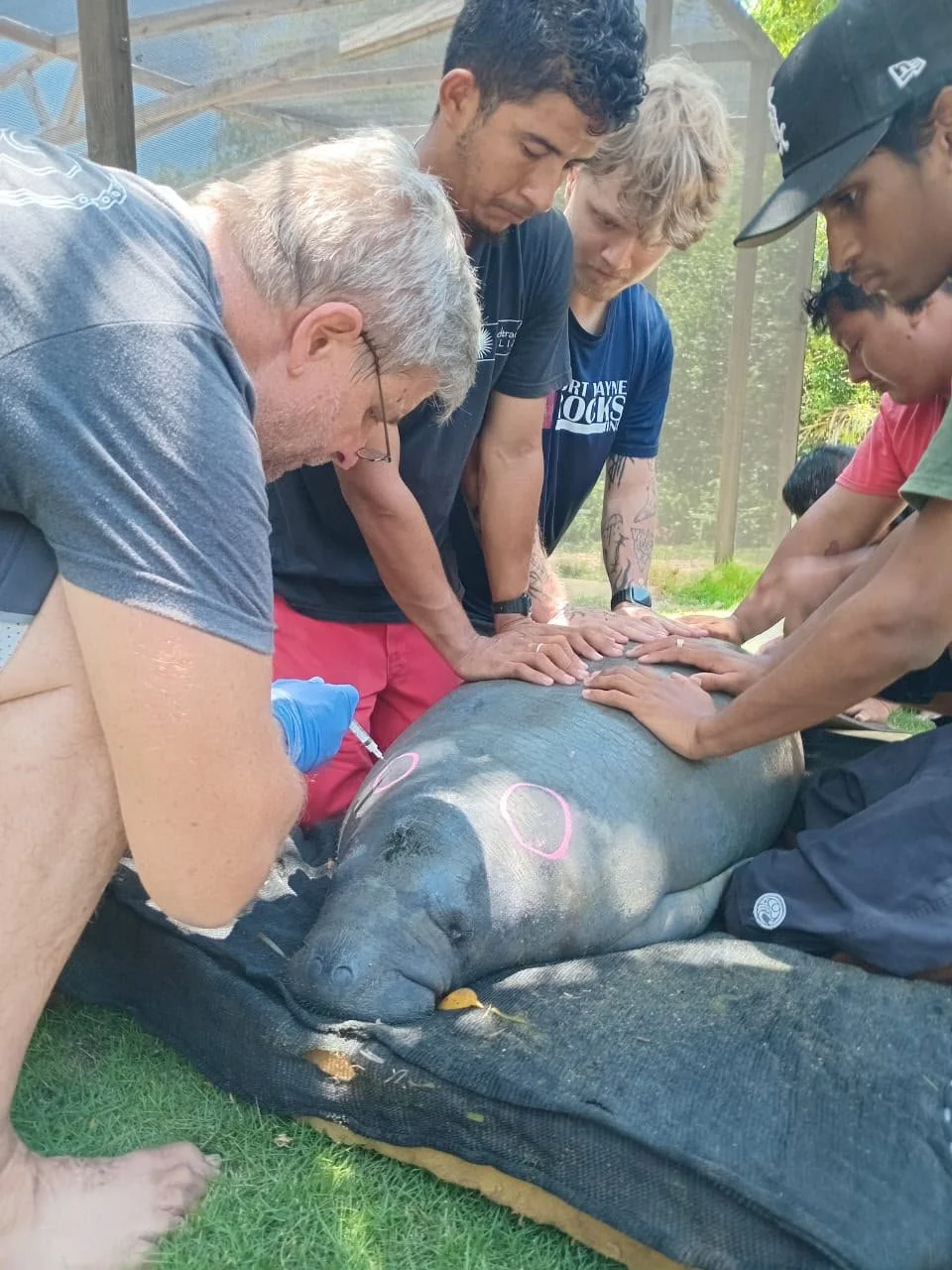
Twix has his pit tags inserted
Twix has already had his PIT tag inserted for identification purposes in preparation for his release into the lagoon within the coming weeks. He will be fitted with a collar around his tail attached to a GPS tracker to provide real-time information on his location. We will guide him into the lagoon to gradually transition to independent foraging after his release, with him returning each day to take his milk at regular times until he is fully independent. If his progress continues the way it has been, I am sure this transition will run as smoothly as possible.